10 Nyamplung Trees Dedicated
Climate commitment
One Kilogram of Vanilla.
One Nyamplung Tree Planted.
Premium vanilla often travels by air freight to reach international buyers safely and efficiently. We recognise that this journey has a carbon footprint.
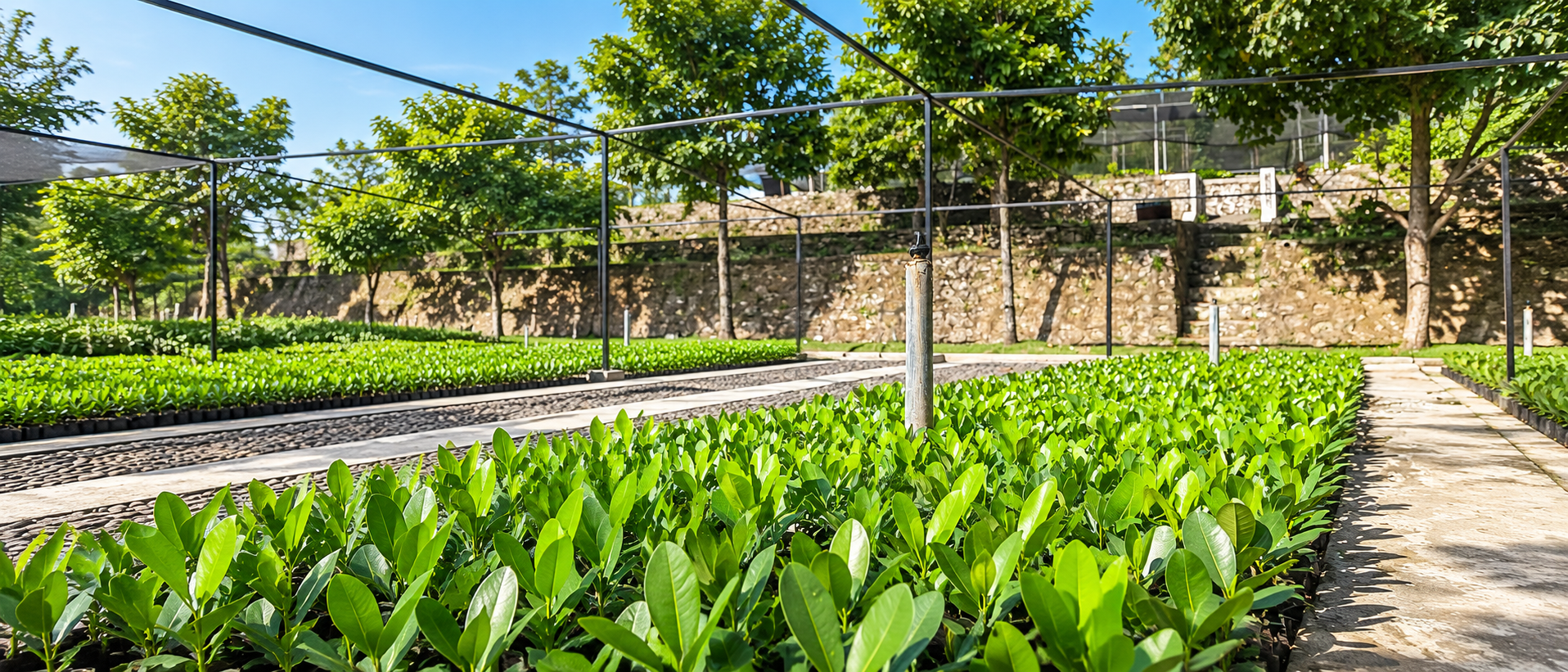
For every 1 kilogram of vanilla supplied, Tropica Rain dedicates one Nyamplung tree, Calophyllum inophyllum, for planting through our nursery and landscape partners in Indonesia.
Vanilla, climate & responsibility
Responsible trade must create value beyond the shipment.
Vanilla quality and supply continuity depend on healthy landscapes, biodiversity, reliable water cycles, and farming communities that can adapt to changing weather conditions.
At Tropica Rain, we believe international vanilla trade should not end when a shipment leaves Indonesia. Our One Kilogram, One Tree commitment links every kilogram of vanilla supplied with a practical planting action at the source.
This is a voluntary responsibility initiative. It does not present air-freight shipments as having no climate impact. It is our long-term commitment to support tree planting, productive landscapes, and community participation in Indonesia.
Air freight & climate context
Estimate the footprint of a vanilla shipment.
Use this planning tool to estimate air-freight emissions from airport distance and shipment weight. The estimate is presented separately from Tropica Rain’s Nyamplung planting commitment.
Estimated air freight emissions
Enter a route and shipment weight to see an estimate.
Methodology & data sources
A transparent estimate, not a certification.
CO₂e = (shipment weight in tonnes) × (great-circle airport distance × 1.08) × air-freight emission factor.
Distances use the Haversine great-circle method with an 8% routing uplift. Factors are configured as kg CO₂e per tonne-km using the UK Government GHG Conversion Factors for Company Reporting, 2026. Industry references include ICAO aviation carbon calculation methodologies and IATA Recommended Practice 1678.
This calculator is an indicative planning tool. It is not certified by ICAO, IATA, or the UK Government, and does not calculate carbon offsets or remove the emissions estimate.
Field evidence
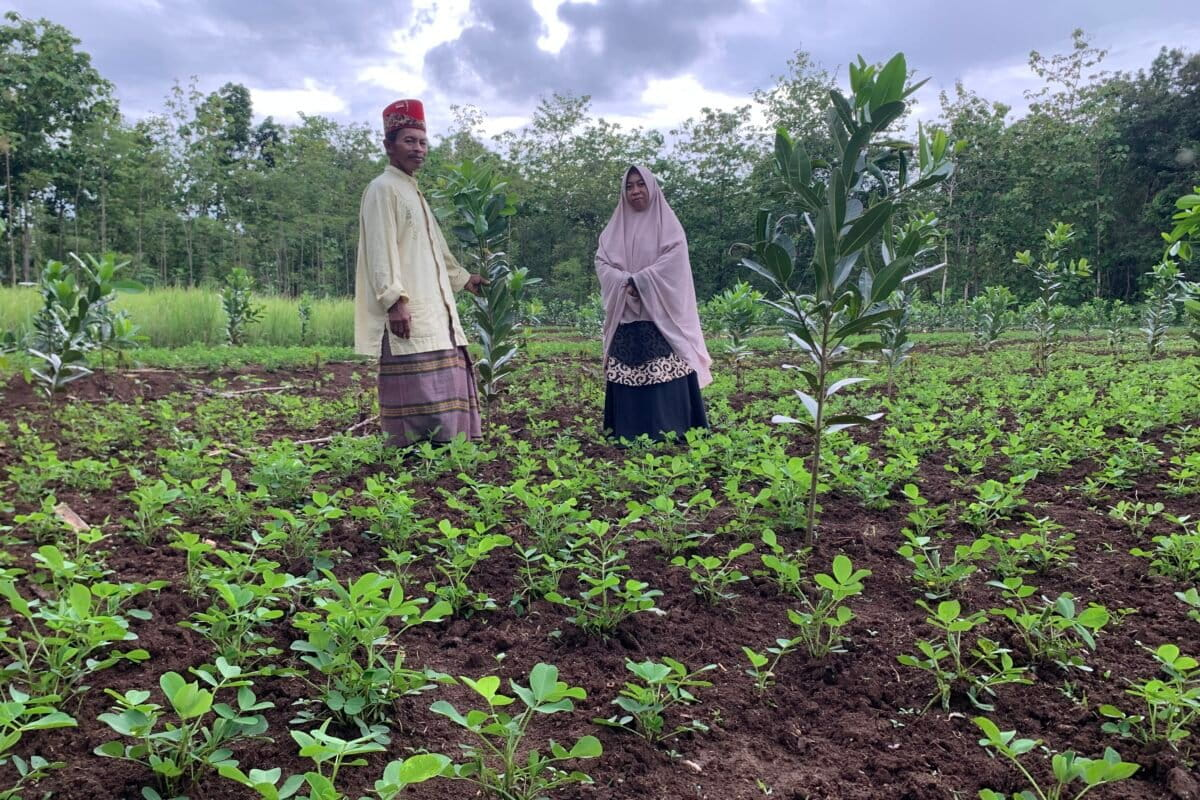
Nyamplung planting at Pondok Pesantren Al-Hadid.
At Karangmojo, Gunungkidul, Pondok Pesantren Al-Hadid is developing Nyamplung, Calophyllum inophyllum, through an intercropping system. Young trees grow alongside locally appropriate crops, creating a practical landscape model that combines tree planting, land productivity, and community participation.
This field activity is part of the planting direction supported by Tropica Rain. Site conditions, maintenance, survival, and future monitoring remain important to understanding the programme’s long-term results.
Indicative carbon assessment
Programme calculations using an allometric formula indicate above-ground carbon storage in the range of 1.3–33.5 tonnes of carbon per hectare, while below-ground storage is estimated at 0.2–5.2 tonnes per hectare.
The combined estimate is therefore 1.5–38.7 tonnes of carbon per hectare, depending on tree growth and size. The available aggregate calculation records 10.46 tonnes with carbon storage of 5.23 tonnes and estimated carbon dioxide uptake of 19.19 tonnes.
These figures are indicative results from the stated calculation and are not a fixed value per tree. Results depend on tree age, site conditions, survival rate, soil, management, monitoring methodology, and independent verification.
Our planting commitment
A direct link between
vanilla trade and tree planting.
Every kilogram of vanilla supplied by Tropica Rain is linked to one Nyamplung tree dedicated for planting.
100 Nyamplung Trees Dedicated
1,000 Nyamplung Trees Dedicated
Tree commitments are based on recorded vanilla supply volume and implemented through our nursery and planting programme.
Why Nyamplung
A tree that connects climate action, renewable energy, and community value.
Nyamplung, Calophyllum inophyllum, is more than a tree-planting symbol. It is a long-term agroforestry species with the potential to contribute to carbon storage, renewable energy development, and community-based economic value.
Carbon Storage Potential
As Nyamplung trees grow, they absorb carbon dioxide and store carbon in their biomass, litter, and surrounding soil. Outcomes depend on age, site, survival, soil, management, and monitoring, so we focus on documenting trees rather than using a fixed claim per tree.
ESG Commitment
Environmental: supporting tree cover and productive agroforestry. Social: creating opportunities for nursery teams, planting crews, and local livelihoods. Governance: linking commitments to recorded vanilla supply and transparent reports.
Renewable Energy Potential
Nyamplung seeds contain non-edible oil with potential for renewable energy and bio-based applications. Tropica Rain does not currently claim to produce renewable fuel; we recognise its future role in an integrated bioeconomy.
Agroforestry & Community Empowerment
Nyamplung can grow within an agroforestry approach alongside locally appropriate companion crops. Nursery development, planting, maintenance, intercropping, and future products can create environmental value and economic opportunity together.
How it works
From vanilla purchase
to planting record.
Our aim is to build a transparent connection between trade, planting activity, and long-term landscape value.
Vanilla purchase
A buyer purchases Indonesian vanilla from Tropica Rain.
Supply volume recorded
The total supply volume is recorded in kilograms.
Seedlings allocated
Equivalent Nyamplung seedlings are allocated.
Planting activity
Trees are planted with nursery and landscape partners.
Planting record
Progress is documented for reporting and future monitoring.
Indonesian vanilla · landscape value
Source Indonesian Vanilla
with Long-Term Landscape Value.
Partner with Tropica Rain for premium Indonesian vanilla while supporting a practical commitment to plant one Nyamplung tree for every kilogram supplied.
Our commitment is simple: every vanilla shipment should help create value beyond the shipment itself.
One kilogram of vanilla supplied. One Nyamplung tree dedicated for planting. A long-term commitment to Indonesia’s landscapes and communities.